A Rurality in the Mountain to Explore
– Revitalization of the Liuping Village through Tourism and Family House with Guest Room
Solo conceptual project for a competition, instructed by HUANG Ruirui, Oct 2022 – Nov 2022
Key words: Mapping, Planning, World Design, Social and Natural Context, Research-oriented Design, Flow, View Catching, Landscape

Chinese cities have seen significant expansion in recent decades, encroaching on rural areas and causing their loss of talent due to outdated development concepts of those. Liuping Village, surrounded by mountains and scenic landscapes, faces population decline due to low local productivity. This project aims to explore diverse revitalization possibilities while raising awareness of Liuping Village’s social reality from an architectural and urban planning standpoint.

Liuping Village, with its natural riches and scenic beauty, remains largely undiscovered due to limited external connections caused by a declining population. Initially settled by pioneers who cultivated the land, subsequent generations turned to fruit farming for income, but struggled to sell their produce due to the village’s isolation. As Chengdu expanded rapidly, younger villagers sought employment in the city, leaving behind children and elders, disrupting family dynamics in many households.
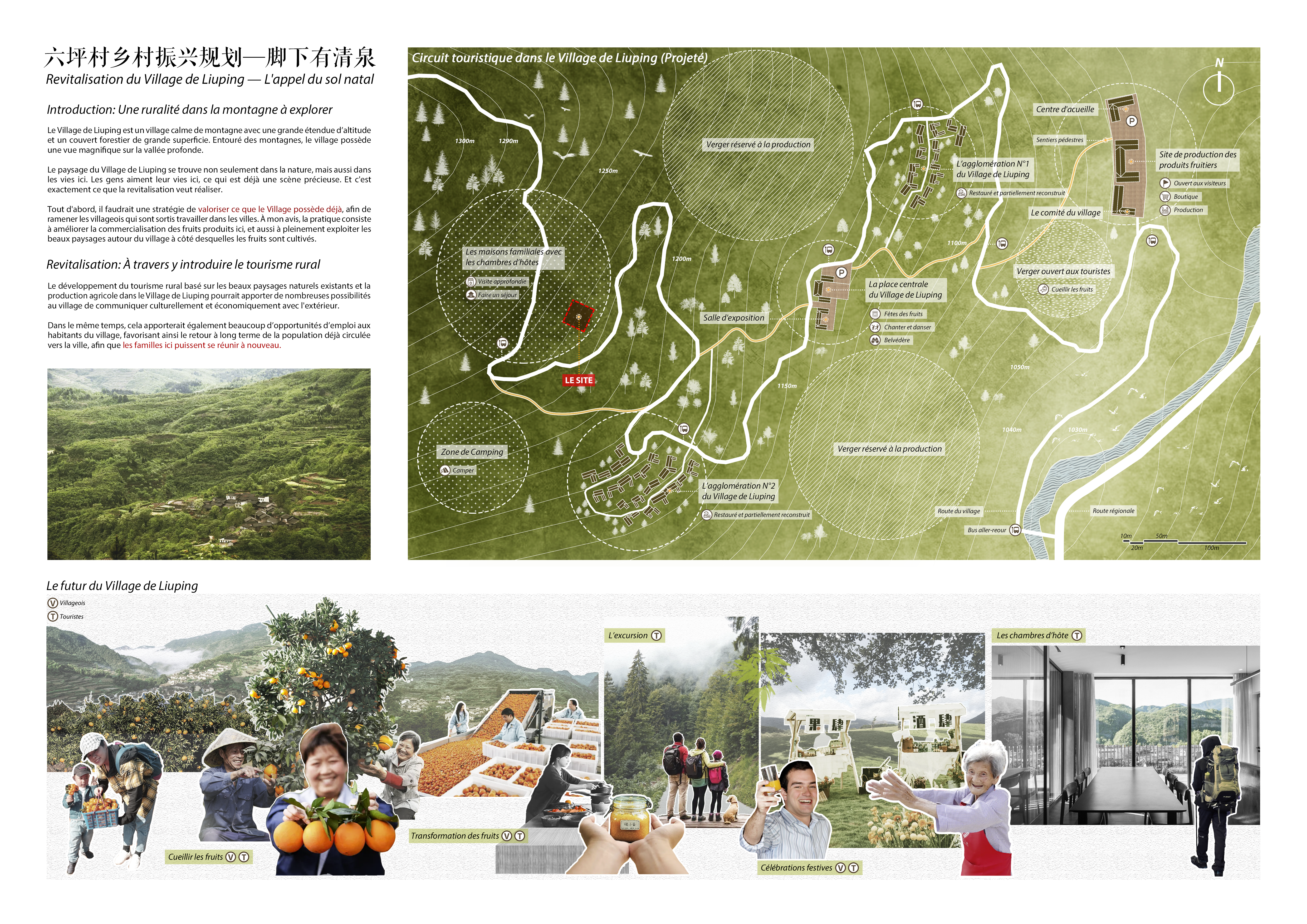
Introduction – Exploring Rural Life in the Mountains: Liuping Village, nestled amidst mountains and dense forests, offers breathtaking views of the deep valley below. Its landscape not only showcases natural beauty but also reflects the cherished lives of its inhabitants. Revitalization efforts aim to leverage the village’s existing assets, such as locally grown fruits and picturesque landscapes, to encourage the return of villagers who have been compelled to cities.
Revitalization – Introducing Rural Tourism Liuping Village: By developing rural tourism centered on Liuping Village’s natural beauty and agricultural offerings, opportunities for cultural and economic exchange with the outside world can be created. This initiative could also generate employment for village residents, facilitating the reunion of families separated by migration to cities.
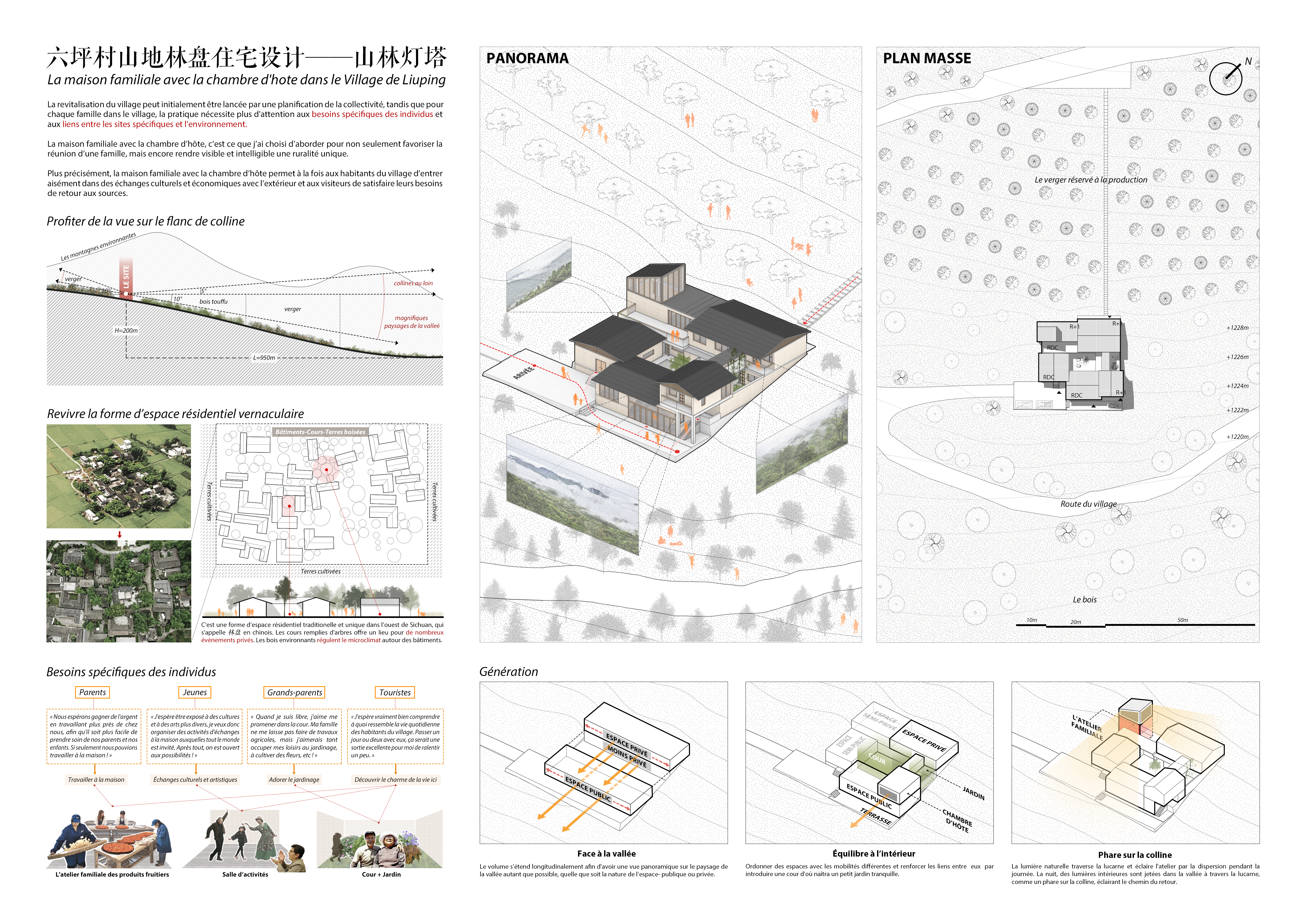
Revitalizing the village begins with community planning, one step further, it will be necessary to focus on individual needs and the connections between living spaces and the nature. I’ve chosen to address the family home with a guest room, aiming to foster family reunions and showcase the unique rural lifestyle. This setup facilitates cultural and economic exchanges for villagers and provides visitors with an authentic rural experience. More specifically in conceiving the spatial volumes of the project, it’s about sorting out the ambiances of all functional spaces so as to organize them in a way that values privacy and shared moment at the same time.
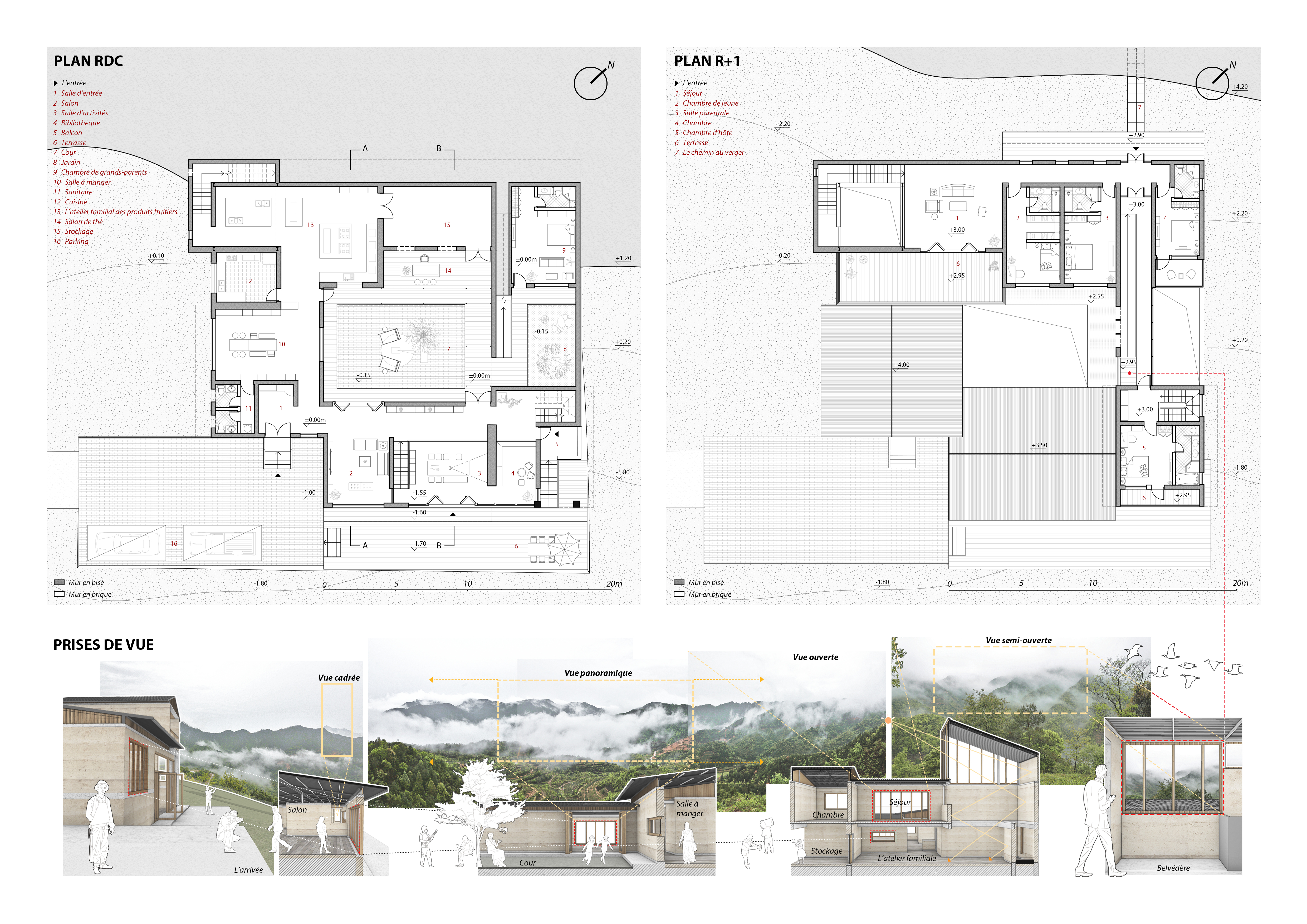
Inviting the breathtaking views of the deep valley below into the interior of the family house has been a core pilar of design process. From corner to corner, the views vary with the touring experience, allowing to position one self in a greater immersion of the natural ressources.
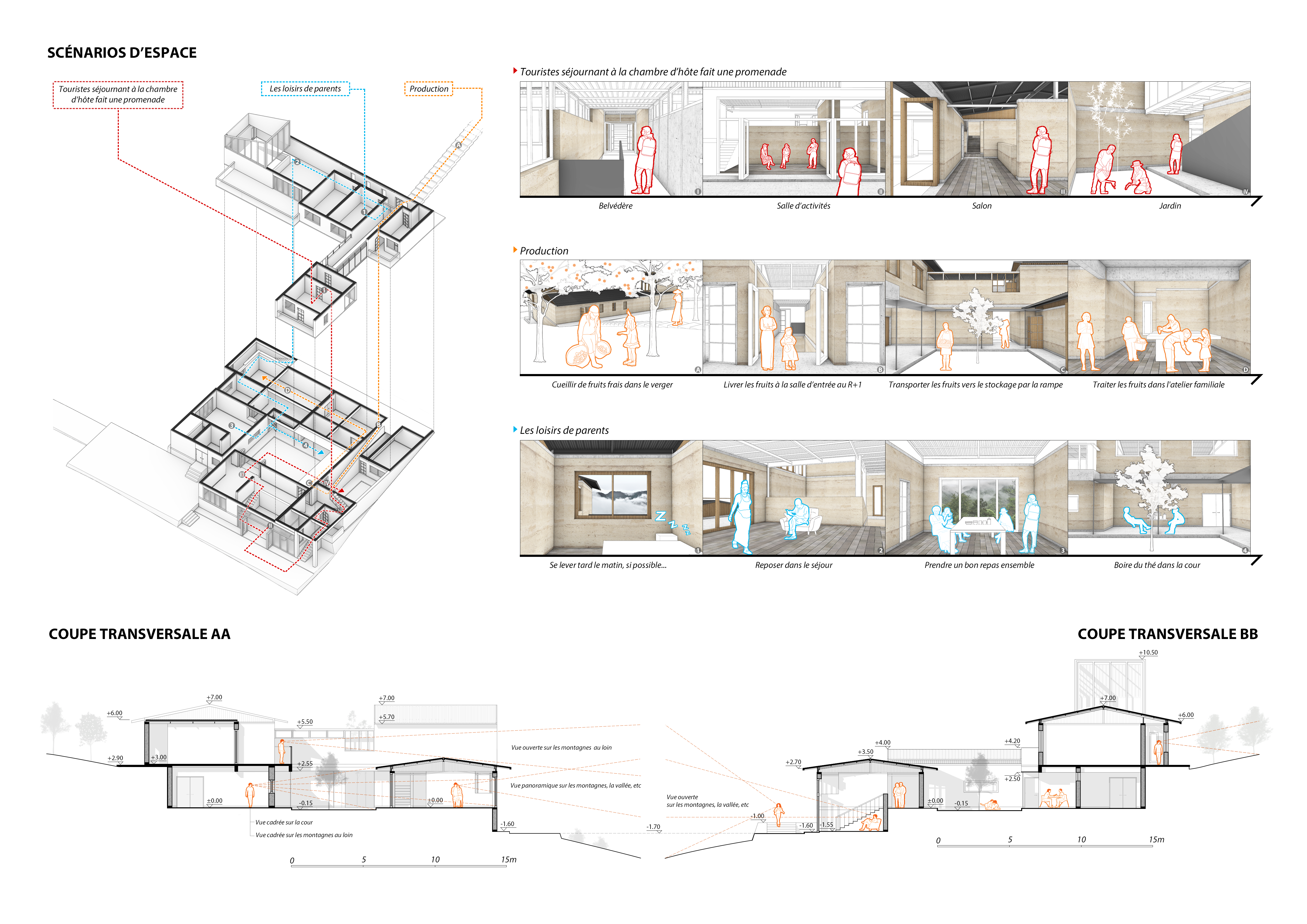
The design of users’ flow and spatial layout are intricately linked. In this plan, three types of activity routes are primarily considered: For family members, flows must effectively connect different living and working spaces while distinguishing boundaries between private and public life. For guests, flows prioritize scenic viewpoints along the route, ensuring they can enjoy the surroundings without intruding on the host family’s privacy. In scenarios where both parties interact, such as participating in workshops together, flow design aims to maximize work efficiency by minimizing the distance for material transportation from the backyard to the workshop.
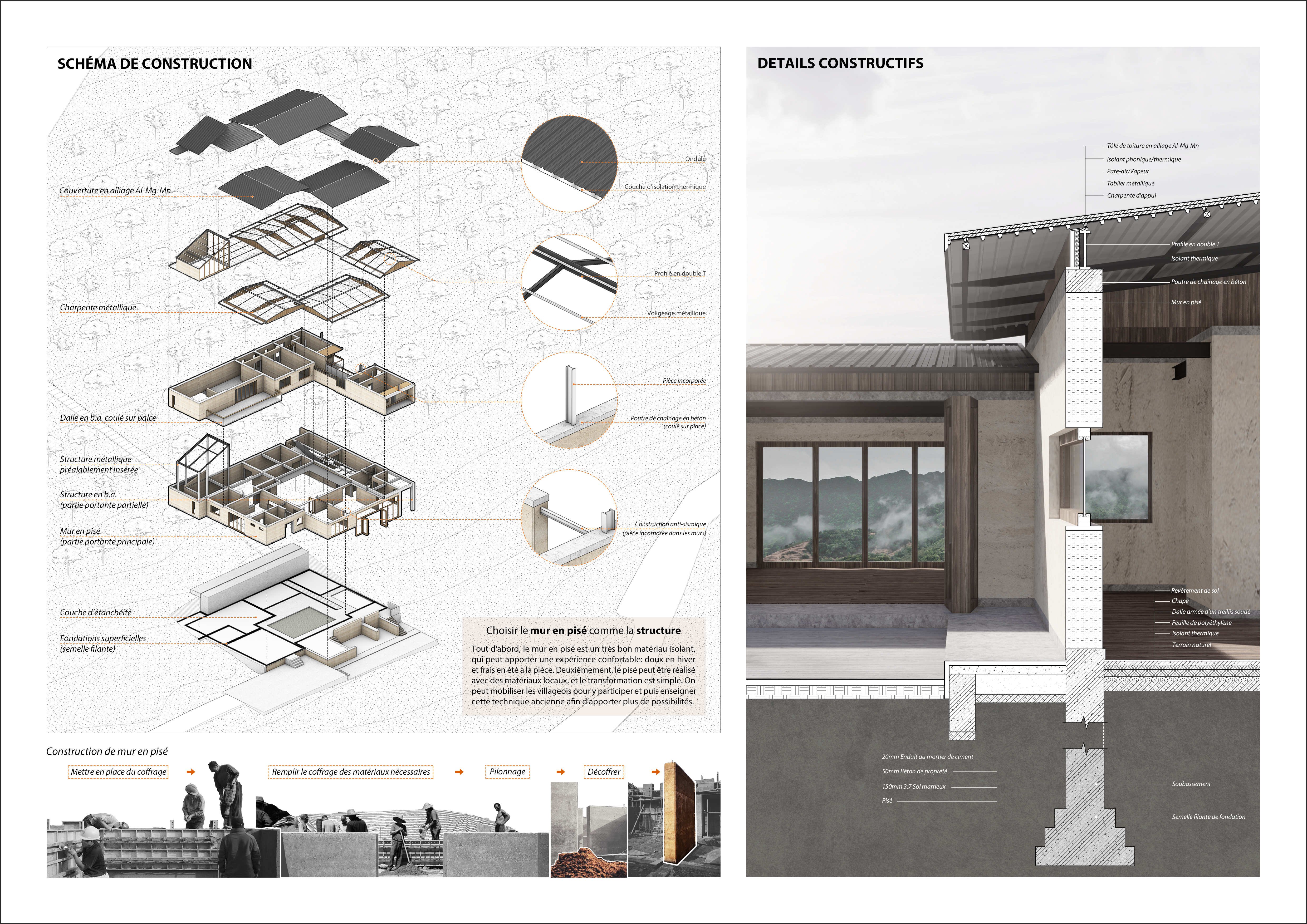
Choosing rammed earth walls as the structure: Firstly, rammed earth is an excellent insulating material, providing a comfortable experience – warm in winter and cool in summer within the room. Secondly, rammed earth can be made with local materials, and the construction process is straightforward. Villagers can be mobilized to participate and learn this traditional technique, thereby creating more opportunities of earning their lives.
 MA RUI